-

-
Date July 15, 2026
Mobile App Development Roadmap: A Step-by-Step Process
The decision to build a mobile app in 2026 should follow a strategic path rather than rushing in random directions with trend-driven blindfolds on. The smartphone industry has reached the 7-billion-user mark, making it a huge market but also highly competitive.
Here, we present a guide for mobile app developers that breaks down the tried-and-tested roadmap used by the best mobile app development agency to take ideas from concept to App Store launch with measurable results.
Table of Contents
Relevance of Mobile App Development Roadmap in the Real World
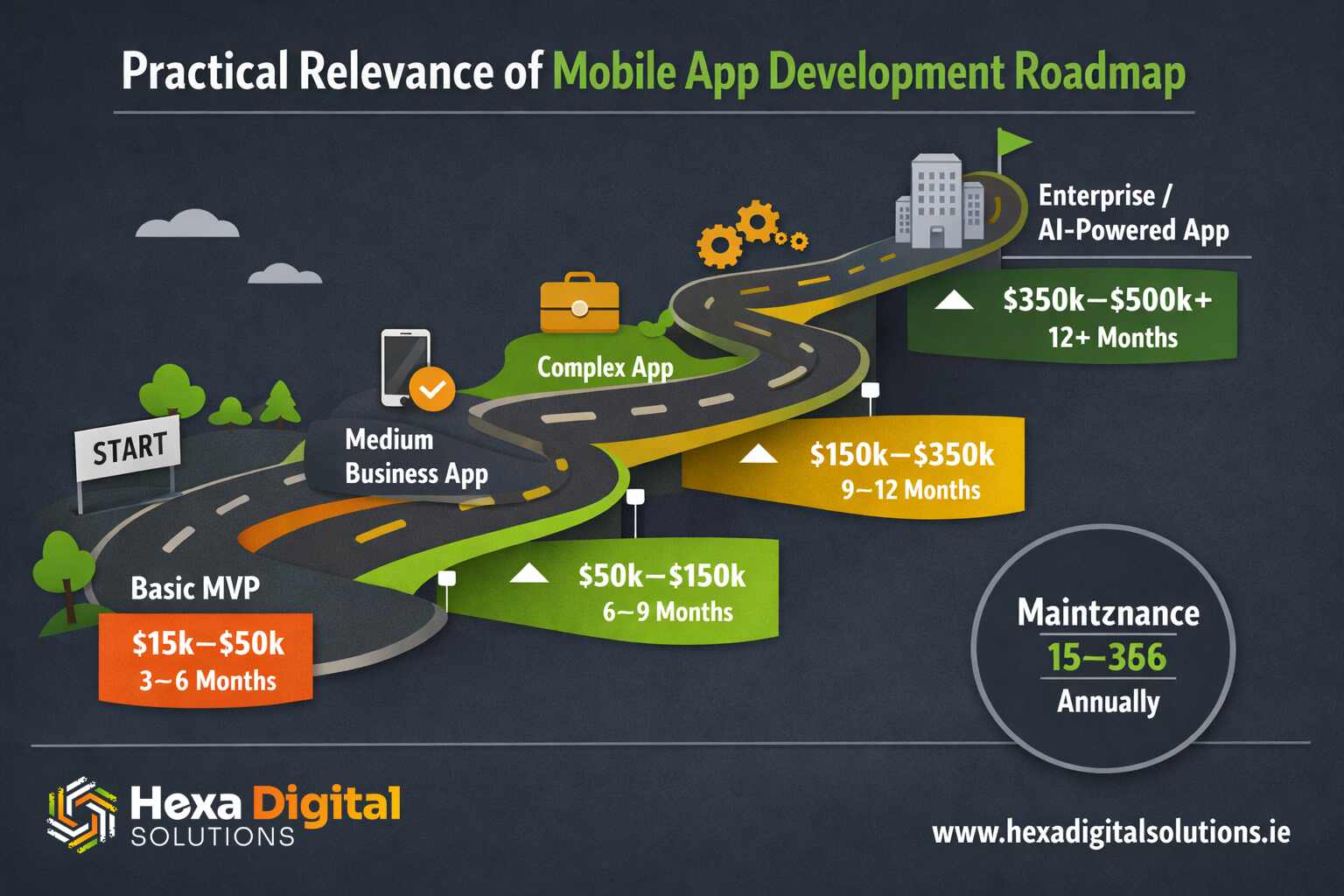
A roadmap outlining guidelines for mobile app development is highly significant and relevant because it offers clarity, minimizes uncertainty, and ensures every stakeholder stays connected from the initial concept to the final launch.
Rather than making reactive decisions, businesses gain the time to optimize features, design cost-effective budgets, highlight technical risks in advance, and deliver optimal product value.
A well-structured roadmap also enhances communication among designers, developers, testers, and business teams while ensuring that every milestone aligns with measurable objectives.
Whether you’re working on a startup MVP or an enterprise application, an orchestrated roadmap helps minimize unnecessary repetition and maintain momentum in the development process.
This encourages many businesses to opt for Hexa Digital Solutions as a partner to convert their ideas into scalable, high-performing mobile applications.
7-Step Guide For Building A Successful Mobile App
The developmental process for building a proper mobile app requires a structured and straightforward roadmap. Follow these seven tried and tested steps to overcome risk, expedite development, and launch the product on a confident launch pad:
Step 1: Ideation and Validate Your Mobile App Idea
Start with the problem, not the feature list. CB Insights found that 42% of failed startups cited “no market need” as the main reason for their shutdown.
Before investing, pressure-test your concept. Conduct 10–15 qualitative interviews with potential users. Ask: “What pain point does this solve, and is an app the right solution?”. The goal is a validated problem, not a rescued idea.
How To Validate Your Mobile App Idea Before Investing In Development? Use tools like Typeform for surveys, Google Trends for demand checks, and Figma for quick mockups to test user flow before any code is written. For instance, Duolingo began by validating that users wanted bite-sized, gamified language lessons on mobile devices.
Step 2: Planning, Strategy and Platform Choice
Define what success means before you ship. Pick 1–2 core metrics: retention, engagement, growth, or monetization. Vague goals like “be the next big app” don’t scale.
Choose your platform based on budget, timeline, and performance needs. In 2026, the main options are native Swift for iOS, Kotlin for Android, or cross-platform frameworks like Flutter and React Native for a single codebase.
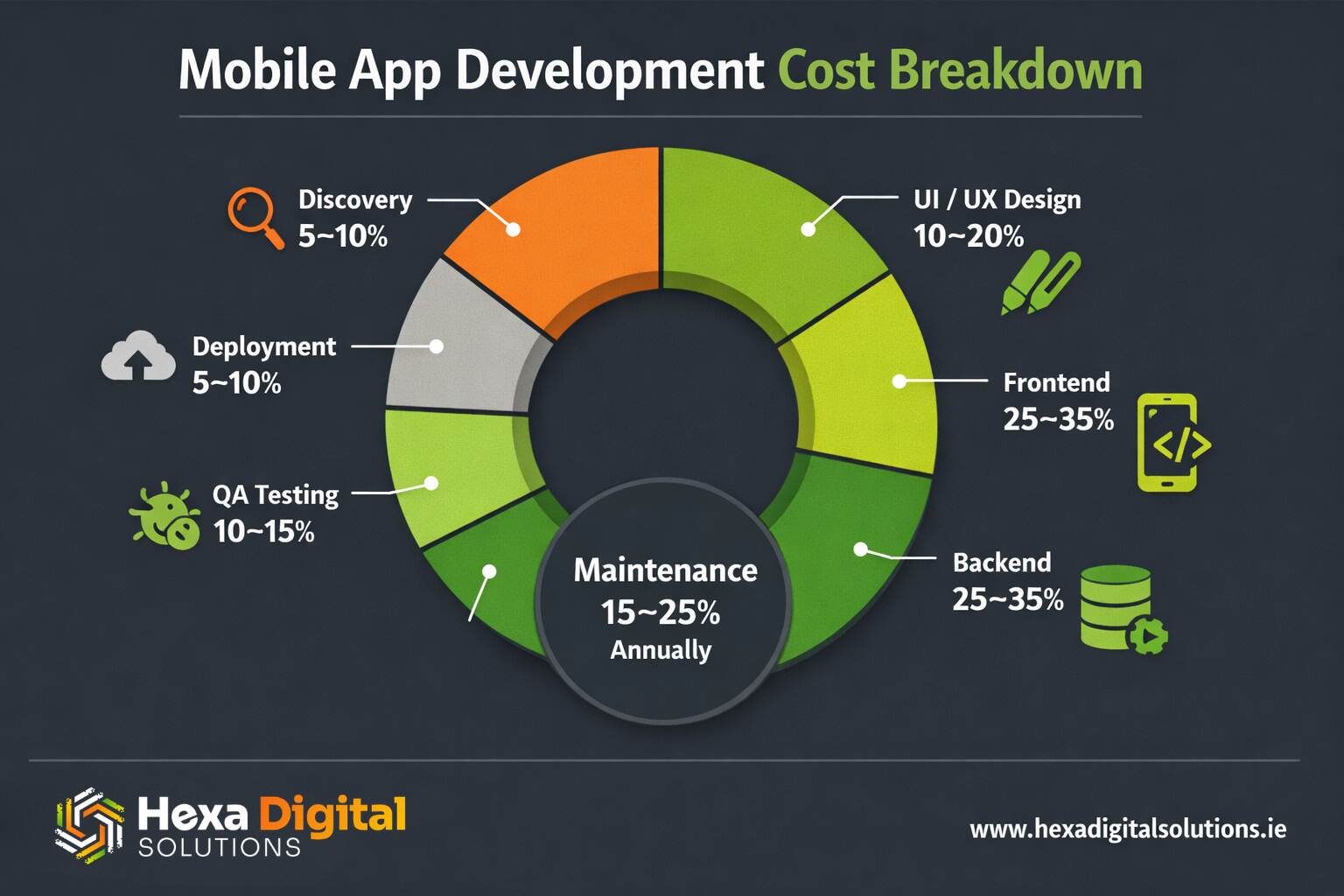
A Guide to Mobile App Development Services in Ireland in 2026 shows a growing demand for Flutter and React Native to reduce cost without sacrificing quality. Budget realistically: initial development costs range from $40,000 to $400,000, with 18–34 weeks to launch.
Mobile App Development Budget Breakdown
| Development Phase | Budget Allocation | Typical Cost (US$) * | What It Covers |
|---|---|---|---|
| Discovery & Planning | 5–10% | $2,500–$25,000 | Requirements, research, roadmap, tech stack |
| UI/UX Design | 10–20% | $5,000–$50,000 | Wireframes, prototypes, interface design |
| Frontend Development | 25–35% | $10,000–$125,000 | Mobile screens, user interactions, animations |
| Backend Development | 25–35% | $10,000–$150,000 | APIs, databases, authentication, business logic |
| QA & Testing | 10–15% | $5,000–$50,000 | Functional, performance and security testing |
| Deployment & Launch | 5–10% | $5,000–$25,000 | App Store submission, CI/CD, analytics setup |
| Annual Maintenance | 15–25% | 15–25% of the initial project cost | Updates, monitoring, bug fixes, and OS compatibility |
Indicative industry ranges compiled from the 2026 GoodFirms survey and Clutch pricing research.
Step 3: Design – Wireframes, Prototyping and UI/UX
This is where ideas become clickable experiences.
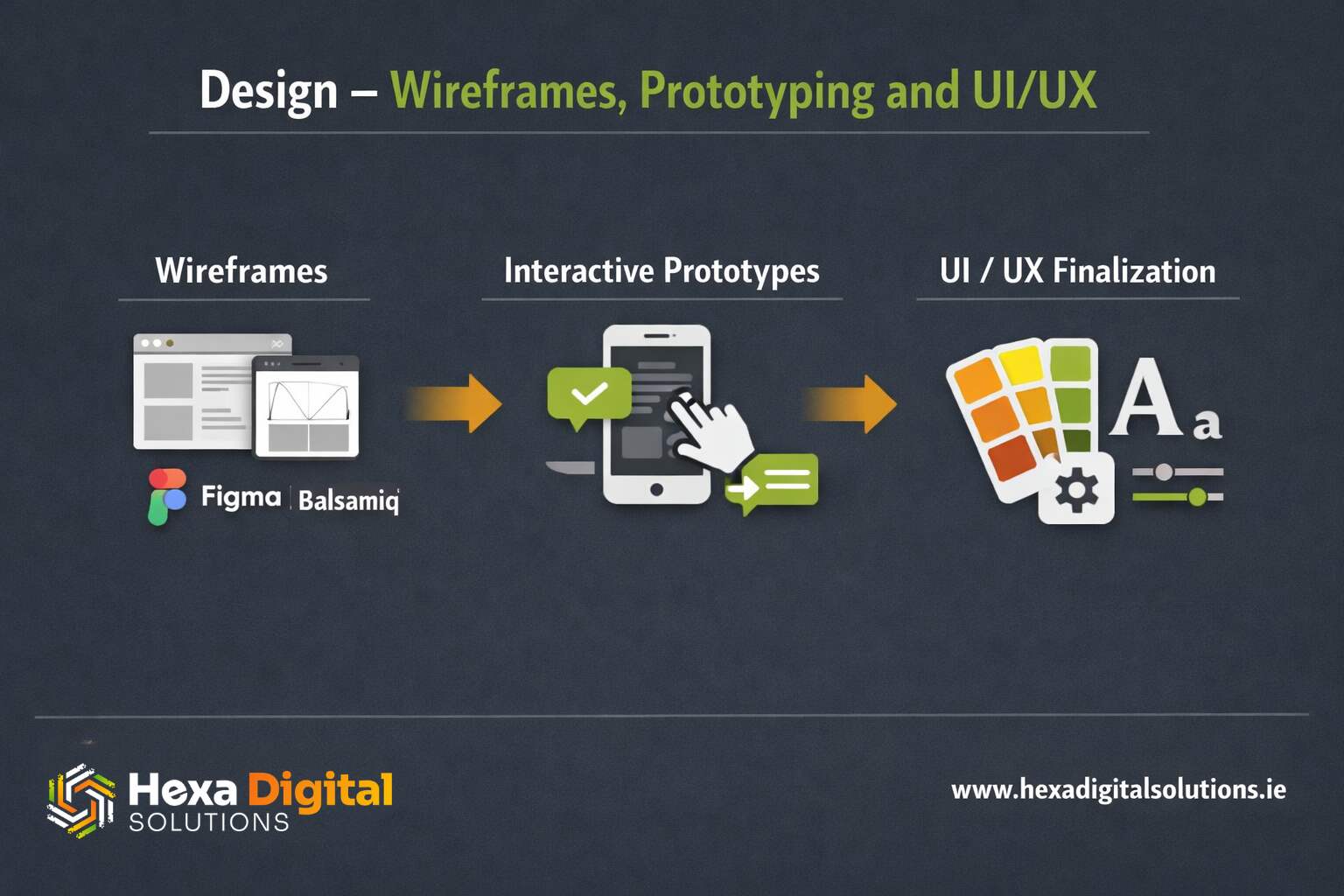
Advantages of investing in Mobile App Design and Development extend beyond aesthetics. Effective mobile app design begins with wireframes that outline screen layouts and user flows, followed by interactive prototypes to test navigation, validate usability, and gather early feedback.
Once refined, the UI/UX is finalized with cohesive colors, typography, and interactions, creating an engaging user experience that boosts retention, enhances satisfaction, and minimizes costly redesigns.
Airbnb case provides real-world relevance because it invests heavily in prototyping. They test new booking flows with real users to cut friction before rollout.
Step 4: Development – Core Coding, Backend, and AI
With design approved, development begins. First, assess technical feasibility: platform compatibility, APIs, and third-party integrations.
Custom Mobile App Development and Why Does Your Business Need It? Because off-the-shelf solutions rarely fit unique workflows. Custom builds allow scalability, better security, and deeper integrations with CRM, ERP, or payment gateways.
How AI Is Rapidly Transforming Everyday Mobile App Development: AI is now standard. Apps use ChatGPT APIs for chatbots, TensorFlow for image recognition, and Firebase ML for personalized recommendations.
Spotify’s “Discover Weekly” and Netflix’s recommendation engine are prime examples of AI driving retention.
Step 5: Key Roles of Professional App Developers in Mobile App Projects
A successful app isn’t built by one coder. It takes a coordinated team.
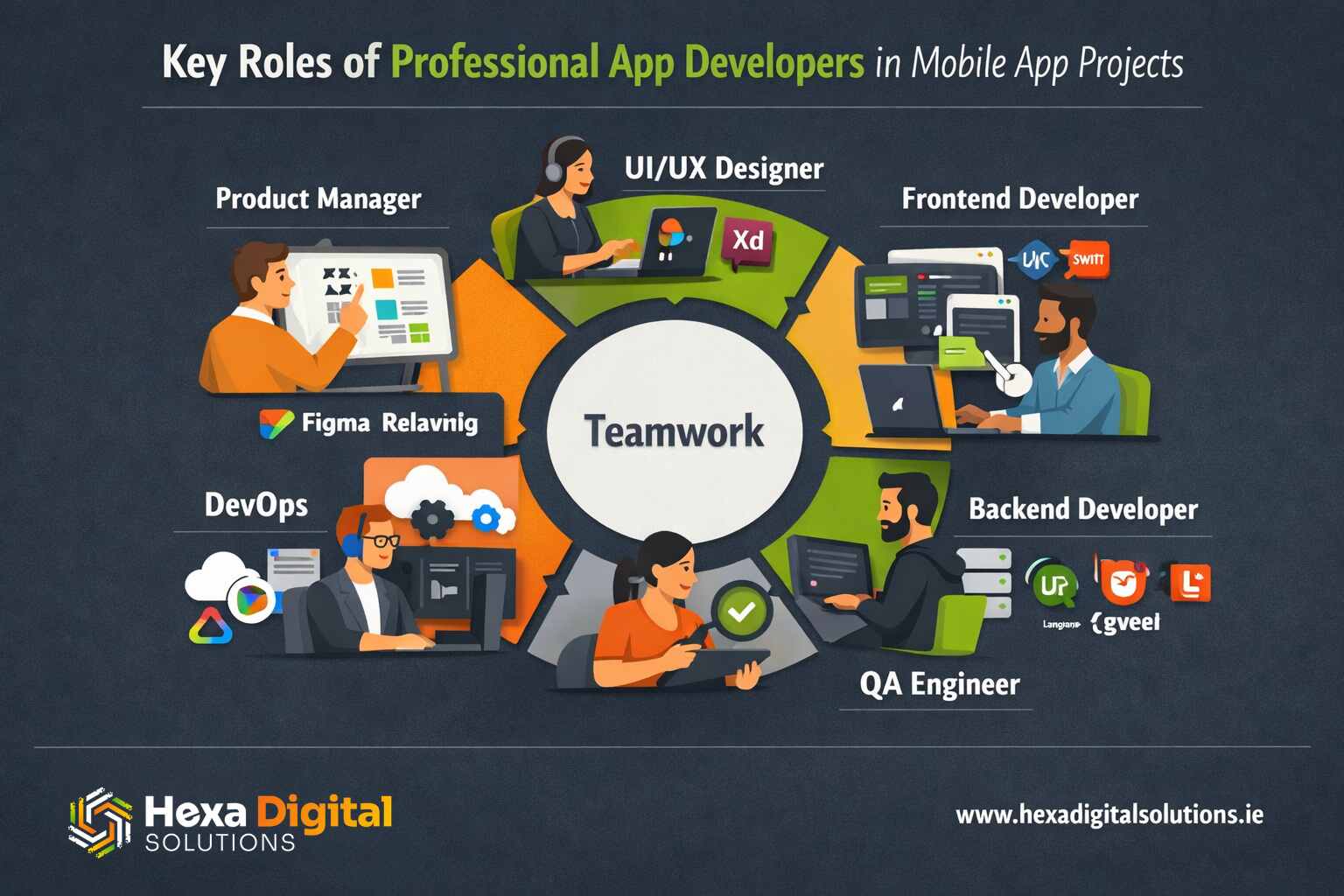
Therefore, mobile app development is a team effort where a product manager drives business goals, UI/UX designers craft intuitive experiences in Figma and Adobe XD.
Similarly, frontend developers build interfaces with Flutter, React Native, or Swift; backend developers power APIs using Node.js, Django, or Laravel; while QA and DevOps ensure quality, CI/CD, and reliable cloud deployment on AWS or Google Cloud.
The benefits of partnering with a Professional Mobile App Development Firm are the availability of a full team without the overhead costs of hiring in-house professionals for each role.
Step 6: Testing, QA, and App Store Launch
Test on real devices across screen sizes and OS versions. Cover functionality, performance, and security. Beta testing with real users catches issues internal teams miss.
Use TestFlight for iOS and Google Play Console for Android beta distribution. For launch, optimize App Store assets: compelling screenshots, description, and keywords. Tools like App Annie and Firebase Analytics help monitor post-launch performance.
Step 7: Post-Launch, Maintenance, and Growth
Launch is day one. Maintenance planning should include security updates, OS compatibility, crash monitoring, analytics, and feature improvements.
Plan on 20-25% of the initial cost annually for updates. Example: ELISA, a sales app, measures success by doubling a store’s weekly revenue and uses that metric to drive its roadmap. Admyt tracks stickiness: 4–5 app opens per active user per month.
This proven roadmap supports transforming innovative ideas into scalable, user-focused mobile apps designed for sustainable success.
What Are the Key Benefits of Working with a Mobile App Consultant?
A mobile app consultant provides professional assistance in transforming raw ideas into usable, market-ready solutions while strictly monitoring and controlling unnecessary costs caused by mistakes throughout the development journey.
From validating market needs and identifying target market segments to selecting the appropriate technology stack and avoiding feature bloat, their professional and technical support ensures that every decision is in coherence with business goals.
Consultants are also well aware of industry innovations, updates, and platform changes – for instance, those announced at events like Google I/O and Apple WWDC – enabling businesses to build apps that align with the latest iOS and Android standards.
At Hexa Digital Solutions, consultants work closely with clients to determine product strategy, recommend scalable architectures, optimize high-impact features, and establish practical roadmaps.
This strategic approach enables faster development, cost-effective budgets, reduced risks, and a solid foundation for launching a mobile app that delivers long-term business value.
Conclusion: From Roadmap to Reality
A straightforward roadmap would transform raw app ideas into success stories. From validation to continuous optimization, every stage is significant.
Partnering with the best mobile app development agency promises high-performance, scalable apps. At Hexa Digital Solutions, we offer businesses guidance to design apps that users would love and grow on.